ILLMs Taking Over RecSys? Maybe We're Running in the Wrong Direction
An LLM is more like a knowledgeable person than a precision machine. Rather than letting it take over recommender systems, let it and classic models each do what they do best.
I build recommendation systems. I’m a Sr. Tech-Lead Manager and AI Research Scientist at Meta, working on ranking and recommendation for Instagram. My recent work spans generative retrieval, LLM-based recommendation, and multimodal content understanding at billion-user scale.
Before Meta I led Shop Ads ranking at TikTok, ran a 30-person ads recommendation team at JD.com, built recruiter search at LinkedIn, and was a research scientist at Yahoo Labs. I hold a PhD from Northeastern University and a BS from Tsinghua University.
This site is where I keep long-form notes on papers and ideas at the intersection of recommender systems and large language models.
An LLM is more like a knowledgeable person than a precision machine. Rather than letting it take over recommender systems, let it and classic models each do what they do best.
Letting an LLM iterate on a recommender system by itself is not limited by how smart it is, but by whether it gets a non-greedy reward and a runway that tolerates negative results.
LLMs adapt fast but compute slowly; classic models compute fast but adapt slowly. The way to make LLMs land in recommender systems is to reduce the dimensionality of the decisions they make.

Getting users to create is the same kind of growth problem as seeding and closing a sale in commerce. Almost everything commerce has learned carries over: seeding makes people want to create, closing helps them finish, distribution after posting is a form of social recognition and the strongest incentive of all, and when creators start seeding other creators, the ecosystem turns on its own.
Turning viewers into creators, then growing creators into top creators: one flywheel, two engines, and three levers for thinking about where modeling fits in the creation problem on a short-video platform.
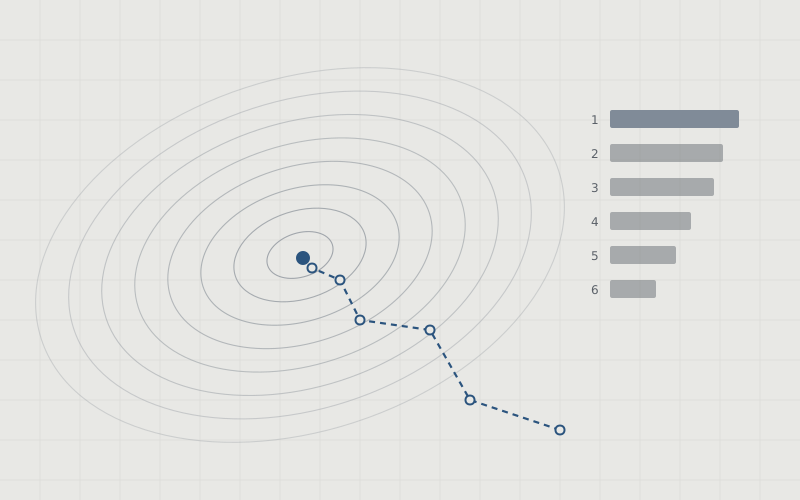
A close reading of OPRO, which uses meta-prompts to let LLMs iteratively optimize prompts, and GR2, which builds a recommendation re-ranker via semantic-ID mid-training, reasoning data generation, and DAPO RL.
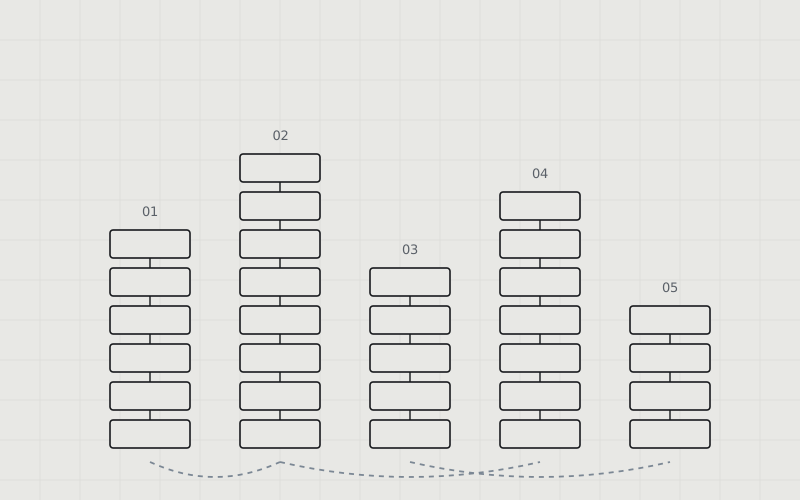
Notes on five papers: CrossDistil’s cross-task distillation, DMT’s topology-aware training, an enhanced twin-tower retriever, Pinterest’s DHEN for CVR prediction, and Xiaohongshu’s UniNote multimodal embedding.
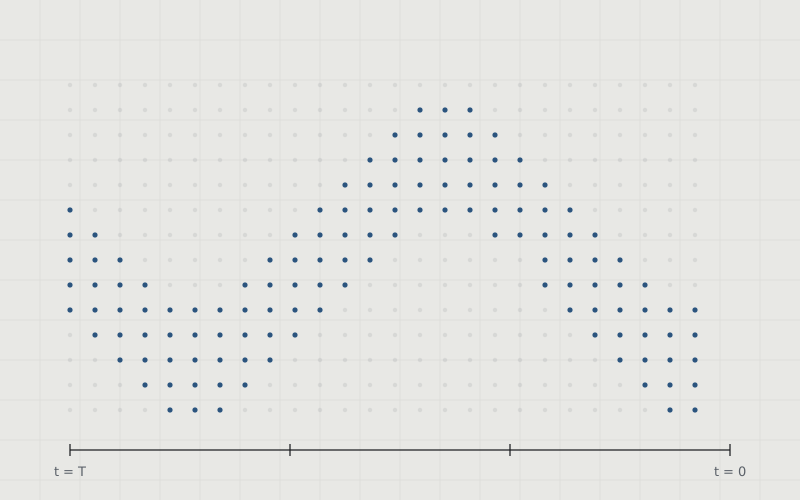
A close reading of DiffuRec, Flow Matching, and the learning dynamics of LLM finetuning, plus a survey of research directions, key papers, and open bottlenecks for diffusion in recommendation.

A categorized reading report on 41 papers at the intersection of recommender systems and LLMs, spanning Semantic ID generative retrieval, two-tower cold start, ranking scaling, and diffusion models.